
Force of Nature – The Andrew Panay Interview
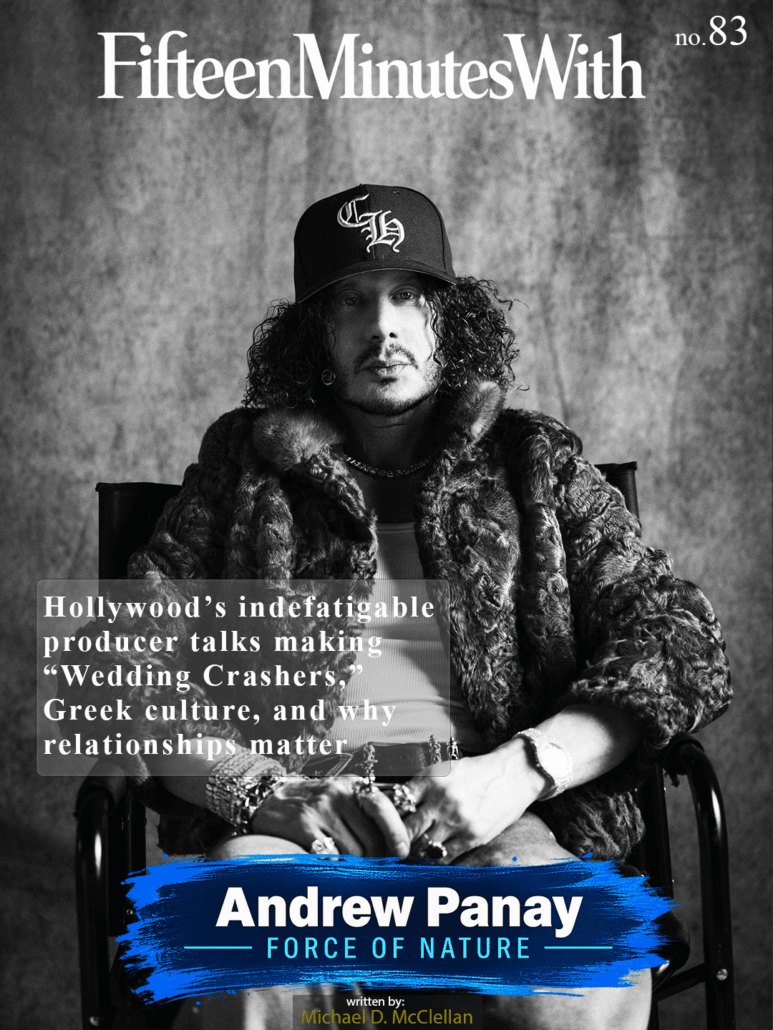
Written By: Michael D. McClellan
Andrew Panay is a man on a mission. The producer, whose film credits include Serendipity, Van Wilder, and Wedding Crashers, is hellbent on proving that Hollywood films can be made the right way—not with a formula, but with a philosophy. His creative output is built on integrity, fueled by love, and supercharged by collaboration. In Hollywood, relationships matter. It’s how deals get done. Panay understands this. He knows what it takes to play the game. But what sets him apart isn’t the hustle; it’s the genuine relationship building that can take weeks, months, even years to develop, coupled with the day-in, day-out grind of putting his reputation on the line and then backing it up with every project that bears his name.
Andrew Panay is the rare filmmaker who pours love into every project, from script to screen. The son of Greek immigrants, Panay is de facto afentikó—the boss—of Panay Films, but his title could just as easily be Chief Inspiration Officer. It’s a place where words like “bright,” “fun,” and “positive” carry weight. Panay’s practicality makes him eminently relatable, but there’s a forceful energy behind it. He’s up at 4:30 a.m. most mornings, working out long before most of us have stirred. He is as accomplished a producer as Hollywood has to offer, yet he approaches each day as if he’s starting from scratch, as if he has to prove himself all over again. It’s a drive that runs full throttle.
“I’m driven to the point where it might not be considered the healthiest behavior,” Panay says, his voice a mix of passion, exuberance, and self-awareness. “I’m sure that having a tortured soul and being a glass-half-full guy comes from my parents.”
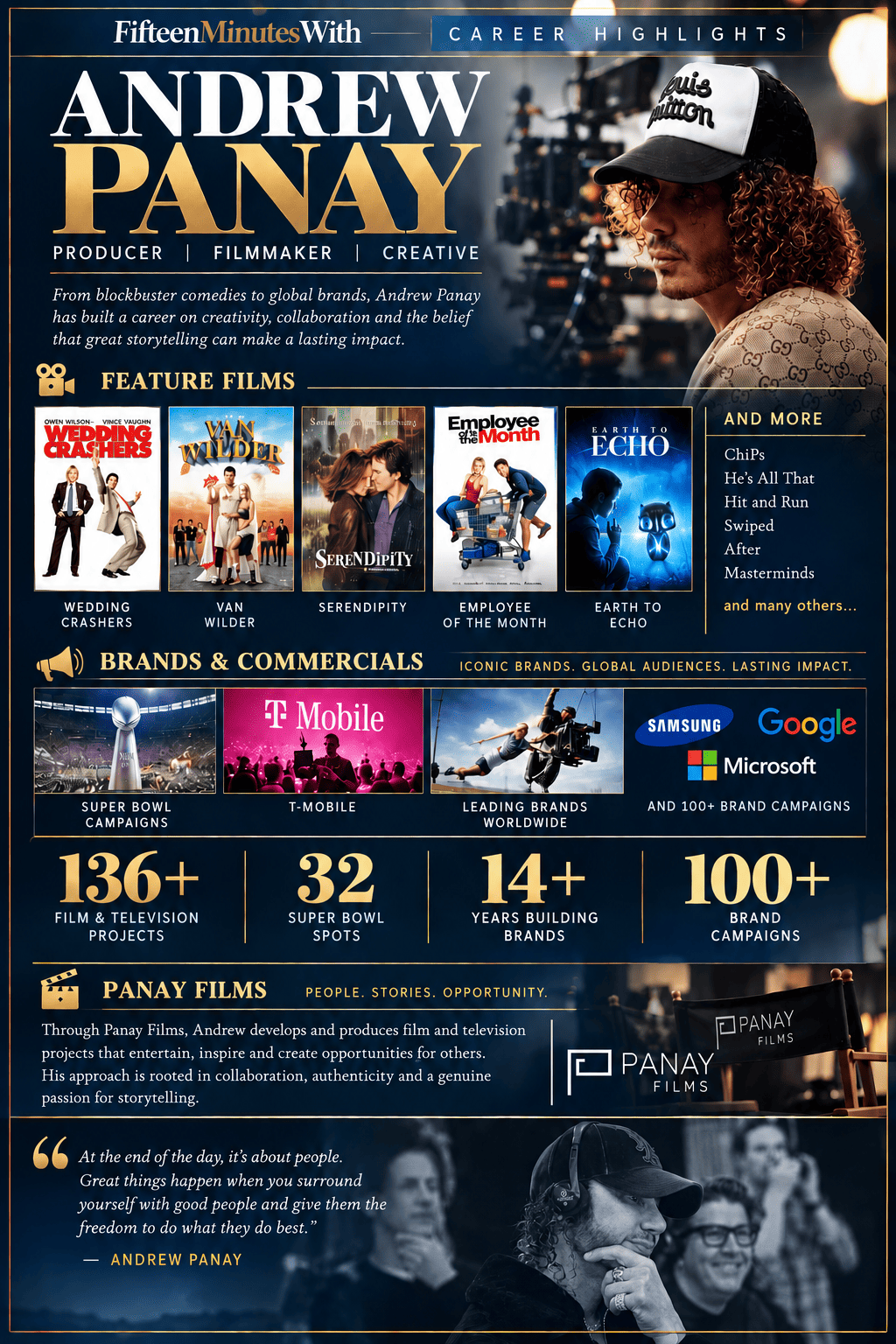
Family is everything to Panay. His parents immigrated to the United States with $10 to their name, determined to chase the American Dream. Panay’s fierce work ethic and his insistence on doing things the right way were ingrained in him from the jump. That his motor is stuck on full-throttle isn’t necessarily a bad thing; it has helped Panay Films adapt and thrive in a world where so many other production companies become complacent and fail. Panay Films has been at it for more than 20 years, with 136 film & TV projects, 32 Super Bowl spots, 14+ years building brands, and 100+ brand campaigns to its credit. It’s a reflection of how deeply Panay cares—about his work, and how it hits.
“There’s nothing worse in the world than testing your movie for the first time to see what you have,” he says. “It’s judgment day. It’s the worst and potentially best-ish day of your life if it goes well.”
Panay is also big on pushing the creative envelope, a philosophy that has helped Panay Films thrive. That culture of creativity earned him a nomination for the 2026 LA Times Executive Forum & Leadership Awards. And while he is big on innovation, it’s his warmth and genuineness that stand out—an oasis in an industry full of lip service and half-truths.
“For me, I don’t consider taking days off from something that I love, which is my creativity,” Panay says, “but the best part of the creative process is doing it with a team of people. I have nothing without the team. I might have great ideas, but I’m not the only one empowered to create. We co-create on ideas and execute on them together. It’s a team in the truest sense. ”
Whether you’re talking about feature films or commercial spots, Panay is all about storytelling. It’s an approach rooted in the belief that stories should begin with what makes us feel rather than explaining the whys and hows. It’s an approach that goes all the way back to his childhood, to time spent with family, to lessons learned during Greek Orthodox Easter—Pascha—for many Greeks, the biggest holiday of the year. Those times together, playing games like Tsougrisma with his brother, Panos, and feasting on souvlaki and baklava, are the secret ingredients that set Panay Films apart.
“There is a lot of love in our family,” he says. “We’re close-knit, and we especially enjoy those special days together, making memories.”
When it comes to storytelling, Panay especially draws on his Greek heritage.
“There’s a lot of storytelling in Greek culture. It goes all the way back to the beginning of time, to Greek mythology, to Greek gods. That’s where the phrase ‘Greek tragedy’ comes from. We as humans connect to tragedy because we can really connect to feeling pain. If you don’t have a conflict in a story to resolve, you don’t really have a story.”
As Panay continues to innovate, he continues to appreciate. He takes nothing for granted, knowing how hard it is to succeed in this business. He understands that he’s only as good as his last project. He’s also well aware of how fickle the press and the public can be, and how important it is to have family around him when the inevitable storms of the business arrive.
“Family is everything,” Panay says. “I remember when I was a young intern at Disney. I was 19, and my mom would drive around with me at all hours while I delivered scripts. Same with my brother. They’re the reason I’ve had any kind of success. They were there for me on Christmas Eve when I was in the editing room, and they were there when I was working around the clock on set. I love my family. And I try to bring some of that same love with me to Panay Films.”
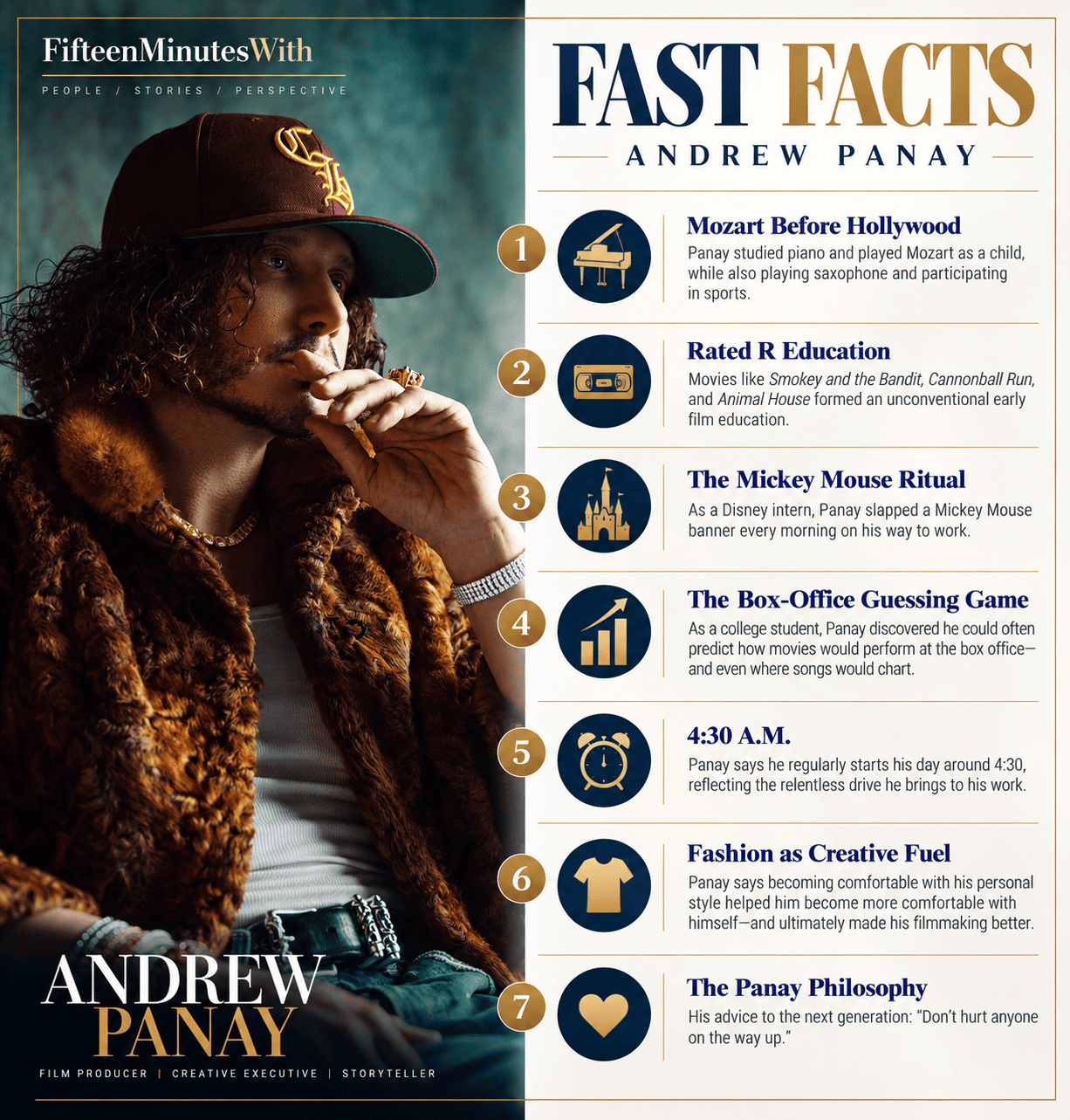
FAST FACTS: ANDREW PANAY
Q&A
Michael D. McClellan
Andrew, thank you so much for your time, and welcome to FifteenMinutesWith. I’m really excited to have you here.
Andrew Panay
Thank you for having me, Michael. I can’t wait to get into it. You have such beautiful, positive energy. That’s where I try and live. I think that as artists who are passionate, we definitely can go on some roller coasters, but overall, I’m all about the love and the positive energy. Hopefully that’s reflective in some of my movies.
Michael D. McClellan
I can’t wait to dive into your films, but first I’d like to start with the journey. When did you know that a creative career was your calling? Did you find it, or did it find you?
Andrew Panay
I think it found me, actually. I’d love to say that I knew. Growing up, I was a piano player, and I could paint. I had a musical ear, for sure. I was definitely different than the other kids. My parents would drop me off at piano practice, and then they would pick me up and take me to football practice, and then I would go home and practice the saxophone. For them it was about being well-rounded. My father even had me ice skating—his reasoning was that I would have good balance on the soccer field.
Michael D. McClellan
It sounds like your family played an integral part in your creative development.
Andrew Panay
We’re talking about Greek immigrant parents who came to this country determined to make it happen for their young boys. There’s something to that—how it all started. I think my creative side collided with the wisdom of my parents—the natural eyes and ears for art that I didn’t know I had at such a young age, at a time when I didn’t have the sophistication or the ability to understand what kind of education my family was giving me. At some level I’m sure I knew that I had talent, but I wasn’t consciously aware. Playing Mozart and playing these epic piano pieces seemed normal to me. I had big hands, which helped; I was going up and down those keys as if it was nothing. I just didn’t understand that I had a talent or a gift. It was more of a subconscious thing at that age.
Michael D. McClellan
Were you adventurous as a child?
Andrew Panay
When my brother and I were young kids, our parents would put us on a plane and send us to London to go visit our relatives. We were 10 and eight. They used to have somebody from the airlines—I think it was British Airways at the time—guide these two little boys and get them to London and safely into their hands once we stepped off the plane. Looking back, I can’t believe we used to do that. But, to your point, it shows a certain fearlessness and curiosity that I think most kids are born with.
Michael D. McClellan
How did your parents help steel your resolve and get you ready to put your art into the world?
Andrew Panay
When I look back on those London trips, I had a lot of fear getting put on planes like that. But my dad was really bold. I also had a helicopter mom, and I mean that in the best way. She cared a lot. She was bold, too. They are Greek parents, and they were very locked in. My dad would say, “This is good for you, this is good for you.” Oh man, we used to cry. My brother was the stronger one between the two of us even though he was younger, and I remember him being a calming influence. He would go, “We’re fine, we’re fine.” My brother is such an incredible spirit.
I think there is something to facing that kind of fear and loneliness, Michael. And my dad was right. There is strength and power that comes with knowing that you can do it, that you will do it, and that you’re going to be okay. But as far as my career is concerned, I think I had the perfect parents. They are a big part of where I am today, and that is me being real. As far as having two sons who have gone through the fires professionally and know how to overcome, my parents have a lot to do with that. Creating pop culture is not comfortable, because no one has seen it yet. And let’s face it, there’s a lot of pain associated with creating pop culture. There is also immense pressure that comes with moving pop culture forward, because in order to get there you do have to be disruptive.
Michael D. McClellan
When did it occur to you that a creative career was in the cards?
Andrew Panay
Maybe when I was in college. I was in business school and I just remember thinking —I don’t know what I’m doing. I can’t count to 10 [laughs]. I’m miserable. I can’t see the big picture with this degree. I don’t know where this takes me. It felt very square peg, round hole because I had been immersed in creativity my whole life. I mean, my uncles were piano players and musicians. My mother was a great singer. That’s not to say it was one-sided; my dad was an engineer, so I sort of had exposure to both sides of the brain. Feelings were big in my family; my dad’s quite emotional, and then my mother’s also a very emotional person. And then you have my brother, who also has both sides of the brain. He’s very sophisticated and smart and emotional. So, it’s quite an interesting family dynamic.
Michael D. McClellan
It sounds like you were swimming upstream at that point in your life.
Andrew Panay
Very much so, Michael. And this goes back to your original question—I think a creative career found me because I don’t think I had a choice. I had a knack for guessing. It started in college. I could open up the newspaper, look at a movie ad, and guess how much it was going to make at the box office. When a song came out on the radio I knew where it would chart. If I heard the first chorus of a Bon Jovi song, I could tell you where it would land and I would be very close. Call it intuition or gut instinct, but it would later help when it came to making movies. I also had a knack for distilling a story. So, when I got my internship at Disney, that’s when I started to realize that this was my calling, that this space is probably where I should go, that a creative space is where I should live.
Michael D. McClellan
Which films inspired you early on, and was there one in particular that drew you to the process of making movies?
Andrew Panay
I remember my uncles used to sit us down in front of the television with them. We owned a VHS player that played videotapes—I’m dating myself when I hear that—and they would pop in Rated R comedies. We were young kids at the time; I think we started out watching these movies when we were 10 and eight, and we did this every summer the next four or five years. We had those movies on a Rated R loop. The movies that inspired me early on? I’m going to go with Smokey and the Bandit as my number one. Then, right behind that would be Cannonball Run, and then right behind that would be Animal House. Those three were on a continuous loop. We had no concept of the education that we were getting. We wore out those tapes, and then, in the early eighties, National Lampoon’s Vacation joined the mix. As the years went on we discovered movies like Weird Science, and as we got older the John Hughes movies started to hit. So, it went from Smokey and the Bandit and Cannonball Run in the early years before landing in the John Hughes era. All those were on a loop. We would giggle and giggle and giggle and giggle like the two little boys that we were. Those movies probably weren’t the most appropriate movies for our age, but being from Greek culture and European culture, there was no Rated R or PG-13. It’s different in Europe. It’s not quite as conservative.
Michael D. McClellan
In 2026 you were named a nominee for the LA Times Executive Forum & Leadership Awards. As the driving force behind Panay Films, what does that nomination mean to you?
Andrew Panay
Thank you, Michael. As far as awards are concerned, I’m always honored when they happen and it’s great, but it’s truly a byproduct of what we are trying to do at Panay Films. As long as I’m delivering for my clients, and as long as I’m getting them a return on their investment, that’s the most important thing to me. I think it’s great to be acknowledged as an LA Times Executive Forum & Leadership Awards nominee—who doesn’t want to be recognized for their hard work? I’m not going to pretend it doesn’t feel good. However, what feels much better is when my colleagues and clients are winning because I have had something to do with it. It’s more about them than it is me.
Michael D. McClellan
Panay Films has an impressive track record: More than 20 years producing, 136 film & TV projects, 32 Super Bowl spots, 100+ brand campaigns, and 14+ years building brands—and that’s just scratching the surface. As founder and CEO, what are you most proud of to this point?
Andrew Panay
As far as building Panay Films, I think it all comes from the same place, and that’s family. Don’t get me wrong, I think that being immigrants also has a lot to do with it, because my parents didn’t come here to mess around. My dad came to the United States with $10 and the mindset that we’re going to make something of ourselves in this country, to work hard and make the most of every opportunity. My mother was the perfect complement to that. She’s no joke. She’s the real deal. My mother was basically saying, “We’re going to take advantage of this blessing we’ve been given, we’re going to get to a better place in life, and we’re going to do it together.” And the love that I had, Michael—if you were to ask my dad what the key to success was, it was just love—love your sons more than you can possibly love anything in the world. That would be his response. I would say absolutely that that was the formula. But I would also say that we had a safe space to come home and fail. Dad would say, “It’s okay, son. I love you. I got you. We’re your parents. We love you. If you fail, you can get back up.” And I really think that those lessons, coupled with the love that we had in our home, ultimately became the secret ingredients at Panay Films.
Michael D. McClellan
Let’s talk about influences. Who were some of the people that helped you get excited about a career in making films?
Andrew Panay
Well, a lot of the people who have influenced me are actually still leading today, which is exciting for me. It tells me that I can be around for a little longer. When you’re watching Spielberg movies on a loop, or you’re watching Martin Scorsese, or you’re watching the work of someone like John Hughes, you’re watching and learning from genius-level directors and producers every step of the way. Then, along comes someone like Michael Bay, an exciting filmmaker who, all of a sudden, cranks that up to a whole other level. And then you’ve got the Wes Andersons and the Paul Thomas Andersons, which is a whole different tone. Or you’re inspired by what someone like Adam Sandler was able to do first comedically, and then through dramatic roles in films like Uncut Gems, and also as a producer like me. I was able to learn from—and be inspired by—people like this every step of the way. They showed me that the process of filmmaking could be both exciting and fun, even though the process could also be incredibly hard work.
Michael D. McClellan
You mentioned Adam Sandler. You’ve become close with many actors that you’ve worked with.
Andrew Panay
Sometimes I have to stop and pinch myself. The generation that I grew up in, where I admired the Will Ferrells and the Vince Vaughns and the Owen Wilsons, I was already such a huge fan of those guys. Who knew that I would get a chance to break into that world and become very close with a lot of them?
Michael D. McClellan
Do those relationships with people like Will Ferrell ever feel comfortable? Like, Will Ferrell is just another guy you know?
Andrew Panay
Never. I think because I aspired to be in that world, it naturally led me into the orbit of people like Ryan Reynolds, who starred in Van Wilder, but I never take it for granted. It also led to getting that chance to do Serendipity with John Cusack, which was like, “Whoa, I’m working with the same guy I grew up admiring. The guy I watched in Better Off Dead and Say Anything.” And growing up a John Hughes fan, I couldn’t get enough of Sixteen Candles. John Cusack was 17 years old when he made that movie. He was so young. A teenager. And I was just a boy. Fast forward. All of a sudden I’m an adult, and John’s just a little bit more of an adult, and now we’re doing Serendipity together. It was so surreal. I never take those moments for granted.
Michael D. McClellan
When I think of the popular adage, “Love what you do and you’ll never work a day in your life,” I can’t help but think of Andrew Panay.
Andrew Panay
That’s the exciting part about Hollywood. If you have talent and you’re able to create, anything that you can imagine is possible. Every day is filled with potential. You don’t know if you’re going to be doing a project like Pay It Forward. You don’t know what doors that might open. When I found that book, I had no idea I’d be working with Kevin Spacey and Helen Hunt and Haley Joel Osment. I’m a young kid, I’m 24 years old or whatever, and I’m finding this book. That’s what’s exciting about it. You never know. The sky’s the limit.
Michael D. McClellan
Is it like the surreal switch has been set permanently to the ‘On’ position?
Andrew Panay
It’s exactly like that. And the really weird part is when you start working with your heroes. That’s when reality starts to squish. You’re like, “Whoa, wait a minute. I’m getting to do this?” That’s why, Michael, you never feel like you got there. I’ve never lost my starstruckness. I could go to set every day and still be starstruck. I mean, I’m working with John Travolta and Robin Williams…what? What do you mean? I was a boy watching Grease! That’s another level. You can’t truly understand and appreciate greatness until you’re in the room with greatness, and you understand the humility that it brings to your life.
Michael D. McClellan
Being around greatness, do you ever find yourself feeling the need to prove yourself? To prove that you belong?
Andrew Panay
The best part about the combination of my parents, my upbringing, and the Greek culture that I had was the humility it taught me. I wasn’t better than anyone else. At the same time, I had to overcome being overwhelmed in the presence of greatness. I had to convince myself that I had earned it. There’s always a part of you that’s like, “What am I doing here? I grew up watching this star, and now I’m in the same room, working on the same project.” There are still times when I can’t process that, Michael. Or I’ll think, “Oh, wait, I’ve created something that you want to be in, and I’m now leading this project.” That can be very intimidating. You really do have to find your confidence and your gear to become a leader when you’re now working with your heroes.
Michael D. McClellan
You mentioned Pay It Forward. The phrase became an official Dictionary.com entry because of that project.
Andrew Panay
Pay it forward, isn’t that a funny phrase? It brings back memories—I discovered that unpublished manuscript and brought it to Tapestry Films with a friend of mine. It’s crazy when I hear that phrase now. It’s part of the popular culture today, but that phrase didn’t really exist before the book, and before I sold the movie. “Sometimes I go, ‘Whoa, that’s so crazy.’” You see it all over, you hear people bring it up in conversation, and it’s like, “Wow, I had something to do with that.”
Michael D. McClellan
How important is it to have mentors in your line of work?
Andrew Panay
I had mentors, Michael. You cannot do it without team, without collaboration, without love, and without mentors. Without mentors, you’ve got nothing. I had Bruce Hendricks, who was the President of Physical Production at Disney. I had Christy Callahan who, at the time, was my executive at Disney. I had Jennifer Gibgot, who’s now my partner, who mentored me at Tapestry Films, and who hired me first. I had Peter Abrams and Robert Levy, who were also my mentors at Tapestry Films. I learned so much from those guys watching them negotiate. I also had a guy named John Blakeman, who mentored me and who’s still in my life. He’s still helping to run the show behind the scenes. All of them were critical to my success.
Michael D. McClellan
When it comes to mentors and mentorship, has your perspective changed over the years?
Andrew Panay
When you’re a young man—and I was in my 30s at the time, making it happen—it’s hard to fully understand what mentorship means to your career. That changes as you get a little older and more experienced. Now I realize what these mentors meant to me back when I was going through it, and I know what they mean to me today. Sometimes you can’t appreciate the impact until you step away and move on. Take Jen, for example. What she did for my career at Tapestry, helping me with storytelling, is immeasurable. Fast forward fifteen years. Now we’re making movies together again. I brought her back into my life. I begged her to please come to Panay Films. Peter Abrams and Robert Levy, those guys at Tapestry, were the guys running the company. They showed me how to do that without me even understanding that it was happening. I have great respect for those two guys and I miss them. And then I had a business manager in John Blakeman, who was coaching me in a different way.
Michael D. McClellan
It sounds like you’ve been blessed with mentors from all aspects of this business. How has this helped prepare you to run your own production company?
Andrew Panay
It has been huge. To be successful at this game, it’s critical to know all aspects of the business. From sweeping the floors to doing the books to marketing our services to the products we produce, you have to have that knowledge. Mentors who have been there and done that are the secret sauce. Take the agents I’ve had through the years, people like Brian Sher, a young agent who grew professionally, and did a lot of the blocking and tackling for me, and who opened up pathways. Or take executives like Jim Gianopulos, the former Chairman and CEO of 20th Century Fox and Paramount Pictures, or Oren Aviv, the former President of Marketing at Disney and 20th Century Fox. They were studio heads that had experience running huge companies at the highest level. So was an executive named Kristen Burr at Disney, who was blowing through things. Sean Bailey, who greenlit this big movie, Earth to Echo. And then you had executives that came into my life and that were mentoring me in a different way. Dick Cook, who gave me my huge deal with Oren Aviv at Disney, when Bob Iger was there. I’ve learned valuable lessons from them all.
Michael D. McClellan
Is it safe to say that mentors open doors as well?
Andrew Panay
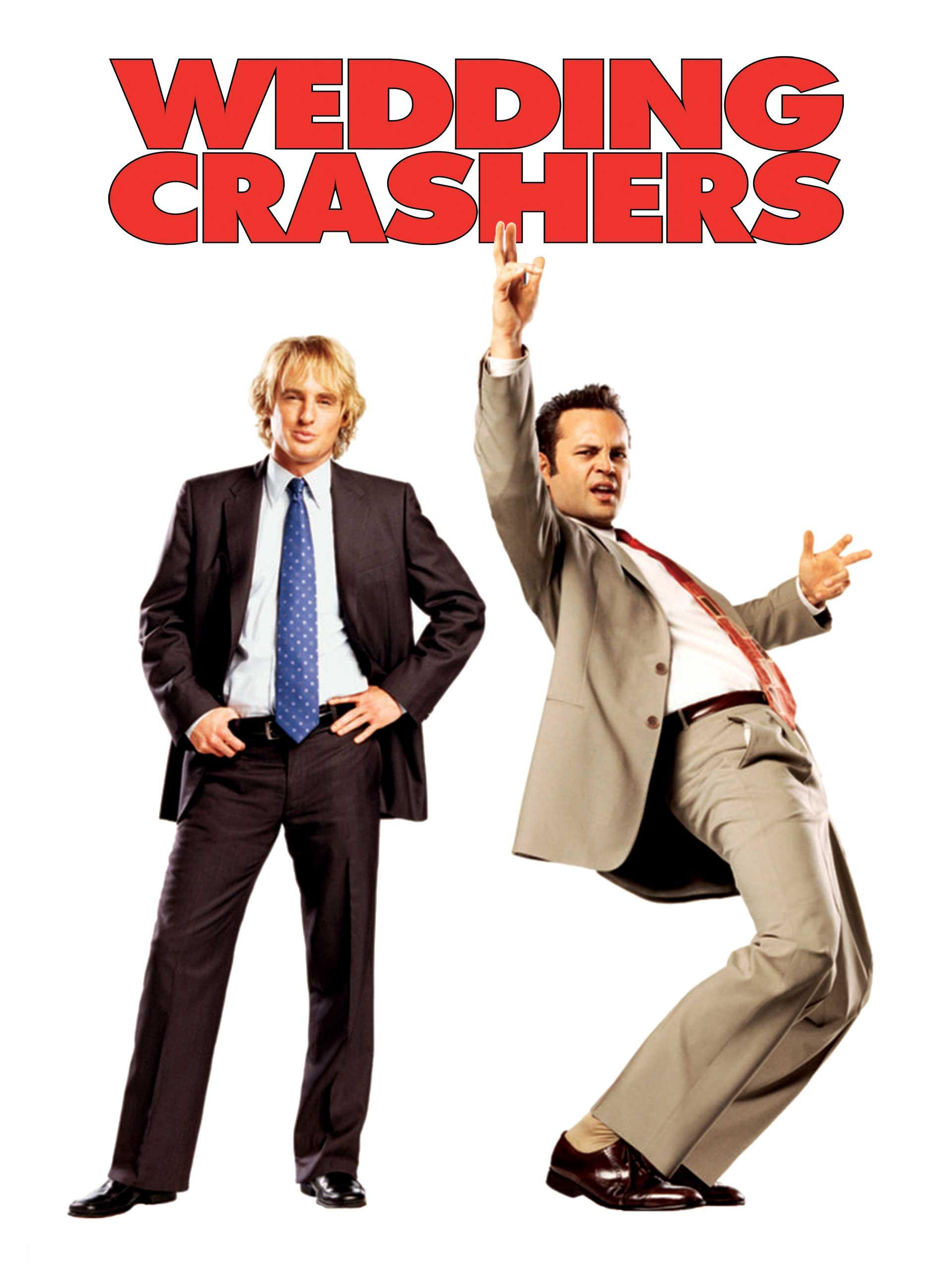
You have these people that come into your life, Michael, and without them success isn’t possible. I’d love to sit here and say that I did it all on my own, but that’s not how this business works. It’s not possible without having people that support you and who have your back. Take Jim Gianopulos, for example. I was on a panel one time at the Greek Orthodox Church of all things. I stood up and I was making all kinds of claims about Wedding Crashers before it came out. I’m doing this in front of thousands of people. I was completely clueless, Michael. I was a kid with big dreams and vision. I had done some big things, great things—Serendipity and She’s All That and Van Wilder—so I was confident enough. But man, was I holding the bat and pointing at the fence, right in front of this studio head at Fox. I’m sure Jim was like, “He’s either a genius or he’s a complete moron.” [Laughs.] I wouldn’t call me either, but he was probably looking at me going, “What is he doing up there?” And then we built an incredible relationship. Funnily enough, my next deal was at Fox when Wedding Crashers opened, with Jim Gianopulos paving the way for me to grow. He could see the talent. Without mentors like him and all the others, I would truly have nothing.
Michael D. McClellan
Making movies like Wedding Crashers and Van Wilder isn’t for the faint of heart. What is it like for you the day your movie hits theaters?
Andrew Panay
When you’re making movies, the vulnerability is so extreme whether you win or lose. That’s because you’re giving birth to something available to everyone, and you’re essentially saying to the world, “Is this any good?” And the whole world’s going to judge you in a night. It is the most exciting and most miserable part of the whole movie-making process. There are two experiences that I wish people could have—and not have: Number one is the test screening. There’s nothing worse in the world than testing your movie for the first time to see what you have. It’s judgment day. It’s the worst and potentially best-ish day of your life if it goes well. Number two is the day your movie gets released to the world. That’s the next best—and potentially worst—day of your life.
Success is so fleeting in this business, Michael. The extremes are so pronounced. So, the emotions cut both ways. You could be loved so extremely today, and you could be hated or ridiculed on another day. Now, I am being theatrical, because movies are just one part of the world. But in your microcosm as a producer, in your world, you think everybody’s staring at you at dinner. In reality, nobody really cares that much [laughs]. That’s a very narcissistic point of view, that people are all thinking about your movie when you go into a restaurant. That they are focused on whether your movie does or doesn’t work. Ultimately nobody really cares, at least as much as you think they do. But because you’re living in your own little bubble, everything that shows up on your phone is the worst thing ever. You can tend to overreact: “I knew it! They hate it!” Or you have one bad review out of 50, and you think you’re a failure. Then you realize you’ve focused on the one bad review when all the others are positive. Still, you’re like, “I will find that guy!” [Laughs.]
Michael D. McClellan
What role does family play when that one critic is less than kind?
Andrew Panay
On those days you look to your family. Because at the end of the day, the vulnerability is so extreme, you need to look for something that feels real and something that feels safe. It’s very emotional for me to talk about, because without them, there really isn’t anything. There’s no chance that I’m here. Without my brother, there’s zero percent chance. There’s zero percent chance without my parents. They are so important, because you need to know you’re going to be okay, that even if it doesn’t work out the way you hope, there’s somebody that loves you.
Michael D. McClellan
And how do you keep things in perspective when a project doesn’t work out as planned?
Andrew Panay
It goes back to family. You have nothing in life without them. They love you so much, and they want you to win so badly. They are the ultimate security blanket. And they also keep it real—trust me, things are never as bad as they seem. They are quick to remind me to count my blessings. I also have a coach named Burton, who is brilliant and who is someone I really love, and one of the things that he says is to keep everything in perspective. My middle name is George, and my parents call me George—Andrew George Panay—and Burton calls me George. He has a thick New York accent, and he’ll go, “George, wait a minute. You made a movie. Do you understand? You made a major motion picture that’s going to be released nationwide, and you’re miserable.” I remember when that movie opened and it didn’t open to the number I’d wanted, but it did well. The reviews were good. And I remember being in the kitchen like it was yesterday. I was with my family, I was with my brother, and Burton’s part of that family dynamic. And he goes, “Are you nuts? You’re so talented. We love you. You’re special.” Michael, what a cool thing to hear when you feel like you’re a loser, or you feel like you didn’t win the way you were hoping, or whatever. It’s a really tough, tough world in Hollywood, and it’s a tough business if you’re looking for adoration from consumers. Good luck with that. That’s why family is so important.
Michael D. McClellan
Your family is Greek. Does that play into the closeness?
Andrew Panay
Without a doubt. We have a loving family. Greek culture is very open and welcoming. It’s a warm, inviting culture. Everything is about community. Meals are very important. My pappou—my grandfather—liked family being together and sharing a meal. That meant the world to me. It still does. To this day, those family meals provide an anchor. Just knowing that we’re going to go to mom’s for dinner and be together, that means everything. A lot of Greek culture centers around food, which is the main reason those family meals are so important. And Mediterranean food—I’m going to argue that it is some of the best food in the world.
Michael D. McClellan
Your positivity is contagious. Give me an example of a film that you worked on where positivity helped your cast and crew through an otherwise challenging situation.
Andrew Panay
We were doing a very challenging shoot on the set of CHiPs—we were actually making a bigger movie for the budget—and I’ll use this shoot as the example. Dax Shepard is my best friend, and most importantly, a gifted, beautiful person, and a great leader. You talk about positive. There’s no one more positive than Dax Shepard. It’s all real. He is as special as can be. Dax has a ‘no a-hole policy’ on set. His nonnegotiable is that we’re not going to get into any kind of negativity on our set. And it got a little hard. We were pushing—it was weekend work, we were all tired, we were shooting on freeways, shutting down freeways—it was a challenging movie. And Dax is just really fantastic, and just so special and positive. And there were some moments that were really difficult. And it’s okay. It’s fair. Everyone was tired and had been working hard. And he stopped the crew. He stopped the crew and the team, and said, “Hey, guys, let’s do this, let’s be together. Let’s love each other. Let’s not turn on each other.” Wow. It was that kind of moment. It was almost like, “If we’re not going to have fun doing it, what are we doing? Guys, come on. We’re driving around shooting motorcycles.”
I’m not saying that he didn’t recognize the team’s hard work, Michael. And I’m not saying that I didn’t recognize the hard work we did. We know everyone gets tired on set, especially on long, demanding shoots. That’s not what he was saying. He recognized how hard everyone was working. But keeping it positive and with love was important to him. And that was important. He kept his word to the entire crew, and it was the best shoot that I’ve ever had. And that just goes to show you, there was a moment in time where everyone was getting tired, and that’s fair. But you do have to remind yourselves, “Well, hold on a minute. We’re here to have fun. We’re making a movie.”
Michael D. McClellan
You make success look easy, yet you strike me as someone with a fierce work ethic. Tell me about Andrew Panay’s drive.
Andrew Panay
Well, I wouldn’t wish it on anyone, so Michael, I’m not bragging about it by any means. But I am ferocious. I’m driven to the point where it might not be considered the healthiest behavior. It goes all the way back to the beginning. My dad has a story about me, and he starts it but my mom always ends up telling the story, even though she can’t get through it without giggling. It kills me whenever they tell the story, and I’m laughing by the time it’s over. Apparently I was in my crib and I was pretty upset about being in the crib. My mom said that I was having at it and crying as hard as I could. Back then the doctors had a rule of thumb, and the rule was something like, “Leave him in the crib, let him cry it out.” So, this one time she’s like, “That’s what I’m gonna do. He’s going to cry it out, get tired, and fall asleep.” I climbed out of the crib. I’m one. I literally climbed out of the crib, somehow jumped on the floor, got to the door and wailed, like, “Get me out of here!” They could not process that. They could never figure out how I got out. Right then my mom came to a realization, like, “Oh my, this little guy’s not having it. He’s not taking ‘no’ for an answer.” I think that kind of says it all. She tells that story laughing all the way through. She’ll look at me, shake her head and say, “You were one determined little child. That’s all I’ve got to say about you, Andrew George Panay.” So, I must have been tortured then, and I’m clearly tortured now—to the point that I don’t rest. I get up at 4:30 on most days and I work out as if somebody’s chasing me. I am pushing the boundaries of innovation constantly. I get really upset with myself. I’m very hard on myself. I take all the responsibilities if things go wrong—it is my fault. It must come from the immigrant blood, knowing that my parents struggled and sacrificed. I saw my mom with the coupons. I saw their determination.
Michael D. McClellan
The apple doesn’t fall far from the tree.
Andrew Panay
I inherited so much from my parents, Michael. I’m sure that having a tortured soul and being a glass-half-full guy comes from my parents. We never ever saw sadness in the house. We always felt blessed no matter what we had. My mom and dad were always saying, “You have each other as brothers, you love each other as brothers, and we are a blessed family.” And my mom used to say what every mom thinks about their sons, right? She’d say: “You’re a star. That’s what it is. End of story.” Don’t get me wrong, there’s pressure with living up to all those expectations. I think part of that comes with never feeling like you got there, and probably never feeling enough. Getting up every morning, always operating at full throttle, never slowing down to catch my breath…and like I said, I wouldn’t wish most aspects of my drive on anyone. And with where I’m at in my career, I think that the drive for innovation is another source of motivation. In fact, that’s probably the stronger of the two driving forces.
Michael D. McClellan
Let’s talk about that drive for innovation.
Andrew Panay
Michael, I see lanes. It’s very torturous because I see them early and I want to hit the lane, but you can’t always go straight to Z. You gotta bring people along. Meanwhile, I’m already there. I’m at Wedding Crashers three years before it comes out. I wrote it three years before it came out and I’m there, but is the world there? Is it ready for that movie, a rated R movie starring Vince Vaughn and Owen Wilson? You’d better get lucky, and that thing better hit right when people are ready for it.
So, there are a lot of things you’re dealing with when it comes to someone of my personality type. I’m moving. I see the innovation. I think I know where we’re going to go now. There are times when I’m too ahead, or too late, or whatever, but I can tell you one thing, I’m certainly not sitting around waiting to emulate other creativity. I’m bored already. I don’t even care about this leather jacket I have on right now [laughs]. I’m done with it. What’s next? So, that drive is both a blessing and a curse.
Michael D. McClellan
When you’re working with genius comedians like Vince Vaughn, how do you create an environment to maximize that genius?
Andrew Panay
Well, when you are talking about guys like Vince Vaughn or Owen Wilson or Ryan Reynolds or Dax Shepard, these actors are also genius writers, and they are writing constantly. They also come to work extremely prepared. Nobody works harder than those guys. But you’ve got to give them space to run. If they catch a groove with their writing, you have to get out of the way. If they catch a groove during a scene, you keep the cameras rolling. You give them the space to run. You can’t confine them. I recently watched Billy Bob Thornton work—we just made a movie with him—and you’ve gotta give him the same freedom, to let him do what he does best.
These guys also respect the page, and your job is to reciprocate. You’ve gotta respect their process and their craft. You get their best work when you give them a safe space to run, and then actually feed it, like, “Give me more, give me more.” But, when I say that, you never want to try and pressure them. They’re all so spectacularly brilliant that you can’t make literal demands or be in a constant state of, “Give me, give me, give me.” And you’ve gotta realize that everybody’s human. They’re going to run out of fuel at some point. So, you’ve gotta give them an opportunity to feel safe, and feel like they’re in an environment where they’re going to hit a gear, and when they do, they can just go for it. And then there are other times where they’ve just gotta deliver what’s on the page and call it a day. Trust me, they recognize when a scene doesn’t need that gear. Our job is to understand that whatever is called for that day doesn’t necessarily mean plugging them into the same socket. It’s an unfair ask. They know when to go, and they know what they have to do to make things elevate. They’re brilliant in what they’re doing. Trust them. They’ll make the right decision every time.
Michael D. McClellan
Is it safe to say that you can’t teach genius? You’re either born with it or you’re not?
Andrew Panay
When you’re dealing with a Vince Vaughn, it’s a magical experience and a frequency that you can’t explain until you see it in the room. He goes to a gear that’s not human. Sometimes they’ll say, “Well, guys like that are just like you and I.” You sure? Okay, if you think so [laughs]. Vince is one of my best friends. He’s one of the most extraordinary human beings you’ll ever meet, and if you’re so lucky to spend any time with him, you’ll learn more about yourself than with almost anyone you know. The same with Dax Shepard. Sitting down and having dinner with either of them is a journey. You’ll learn more about love and life than you might in your entire life. That’s how extraordinary these people are. I can’t say enough, Michael. I have a positive aura, but they are as authentic and as beautiful as people see on the screen. You can’t fake genius. It’s just there, it just is. So, to answer your question, they are born with it. As a producer, my job is to help the director guarantee safe spaces for them to unlock that genius.
Michael D. McClellan
Wedding Crashers is a brilliant comedy.
Andrew Panay
The stories about making that movie are as good as the movie itself.
Michael D. McClellan
How do you create a culture of teamwork and setting that environment when you’re on a film project like Wedding Crashers?
Andrew Panay
Well, on Wedding Crashers—or any movie set, really—you’ve got to lead by example. You’ve got to do that yourself. David Dobkin, who directed Wedding Crashers, is a savant in his own right, and someone that I learned so much from. He taught me everything I know about going to the next level on filmmaking. I didn’t mention David Dobkin when we were talking about mentors, but I think he might also be my ultimate mentor when it comes to the filmmaking process. And while we’re at it, Vince and Dax would be my mentors in the actor category. Anyway, what I learned by being involved with David was to also let him run. So, by being an example as a leader, I don’t need to stick my nose into things where I don’t belong. I can just be there to love and support. I think the word is ‘ego’— that’s what we’re looking for, Michael. How do you check your ego at the door and instead be there with love in a way that says, “I’m thankful to be here. I feel blessed to be here.” How do you counterbalance that in an unspoken way that says, “Make no mistake, I’m strong and I’ve earned the right to be here. I’m not flexing while I’m here, but I’ve earned my place. I’m one of the leaders of this film as a producer, and I’ve earned my way here because I created it. This was my idea.” Of course, you never say any of those things. There’s no reason to flex as a producer, because if you have ‘producer’ next to your name, somehow you earned your way there.
So, as a leader, there’s no flexing, no open display of ego. It has to come naturally. You can’t sit there on set thinking, “I’m not going to flex.” If you’re thinking about it, that means you’re flexing. You have to understand inherently that, to be a great coach, humility is your best friend. Be confident. You should already have the understanding that you’ve earned it. So, don’t flex. Why try acting like the boss? Your name’s there for a reason. So, there’s no reason to ever flex. They will come to you and ask for your leadership when it’s time. The best leader empowers his teams and makes sure that those teams are feeling good and working at the highest level. Watching David Dobkin run my job on Crashers was an exercise in leadership. My thinking was: “I was first in. I had the vision to bring Wedding Crashers to the screen, now it’s David Dobkin’s vision. Now I have to support him.” And that was so true. I had to hand it over. Now it was David’s film to make. It was Vince’s film, Owen Wilson’s film, Bradley Cooper’s film, Rachel McAdams’ film. It was the crew’s film. It has now been turned over, and now what am I doing as an egoless producer? My job is to make sure that everybody is feeling great and supported.
Michael D. McClellan
Wedding Crashers is filled with hilarious scenes. Three that jump out: The meatloaf scene with Owen Wilson and Will Ferrell; the dinner table scene, where Vince Vaughn gets the hand job and no one notices; and the scene with Vince drinking bourbon with the priest, played by the late Henry Gibson. What memory stands out, and what was it like to be in the room with those actors?
Andrew Panay
The day of the priest scene Vince was playing a joke on me, which was so funny. He kept turning the lights off and he kept saying to me, “Andrew, what are you doing? Why are you disrupting the scene? What’s going on here? Fix it.” I was trying to figure it out because I didn’t know he was the one behind it. I go, “I don’t know, bro, I don’t know. What do you want from me?” And he just kept turning the lights off. He is so funny. He’s playing with me, and probably thinking it’s a way to get the crew going. That’s Vince’s mindset. Let’s get everyone laughing. Let’s have fun. Let’s have a great time. It just goes to show you what the movie was like, and how much love that we had there, that we were playing around. I mean, it was only for a few minutes but it was enough time to get the joke going.
And what was it like for me? It was watching geniuses do their thing. I got to see it live. I saw it all happening. I saw Bradley Cooper and Vince Vaughn going at it during their scenes, the emotion being generated between their characters. I saw the tension they were building into the scenes. I saw the priest scene where Vince did an eight-minute runner. We let the camera run, no cutting. And I was there with the Will Ferrell stuff, where he was throwing out funny stuff I didn’t see coming, you know, “Mom, the meatloaf,” and then yelling and swearing and whatever. I didn’t know what was going on. I was this young kid filmmaker sitting underneath the camera, because there was no room. The room was this big [makes small gesture with hands], barely enough room for Will and Owen and the camera. I’m sitting there, crouched under the camera and ruining shots from laughing too much. I talk about it on a social media clip that I haven’t released yet, but I had to leave the scene where Will Ferrell was at the funeral, crying. I left the cemetery. I left because I couldn’t take it. I’ve never laughed that hard. I was a wrecking ball. I’m the producer of the movie and I’m ruining scenes. I couldn’t take it. It was that funny. So, I had to go. It was that funny.
Michael D. McClellan
What’s it like looking back on a movie like Wedding Crashers knowing that you were a part of something special?
Andrew Panay
The thing I’ll say about that movie and other movies I make, is that these guys were committed. They were not messing around. They were there to win, to perform, and to become what they all became, and all of the accolades are deserved. And being there is an honor in a way that I’ve respected from day one of this business.
Michael D. McClellan
I get the sense that Andrew Panay doesn’t take success for granted.
Andrew Panay
I was a Disney intern at 18 years old, Michael, and every day I headed off to work with the same excitement that I have today. I remember walking through the hallways and there was this carpet of Mickey Mouse in the old animation building. In fact, it’s still there. It’s a carpet that’s affixed to the side of the wall, and every day I’d run up those stairs on my way to the third floor, and I’d slap that banner every time. I’d hit that banner every single time and I’d go, “Mickey Mouse, come on, man. I’m here. I did it.” Fifteen years later I had my own deal at Disney—it was quite a healthy deal, God bless. I came back as a very fancy producer at that time. It’s your dream as a kid. I’m like, “Are you really back at Walt Disney with a deal in Walt Disney’s old library offices? This is a dream. This is nuts.” It was so surreal. I didn’t even know what I was doing there, coming back as a successful producer after all those years. But you know what? Every day as an intern I slapped that banner. I kept slapping that carpet. I hit it every day. At Disney you’re dealing with magical worlds and magical opportunities. Do I think I deserve it? Probably not. But boy, did I work hard. I also got lucky. And I never took any of it for granted.
Michael D. McClellan
Let’s talk work ethic. What do those words mean to Andrew Panay?
Andrew Panay
Michael, I am blessed to know a filmmaker named Sheldon Turner. I’ve never seen anyone like him in my life. He’s an inspiration. Nobody wrote like he did. We were young kids coming up together, and we were lunatics [laughs]. Boy, we competed on so many levels—who slept the least, who ate the least, who created the most. He was writing a script a week. I’ve never seen anything like it. When you’re dealing with that kind of frenetic pace, you realize that that’s the competition. And I think he still does that. I bet he does. He was up at 3:53 every morning on the dot, writing everything down in long hand. He’d read a book and adapt that book in a week. He put in insane hours. He would just outwork you. That’s who I was growing up with. It didn’t guarantee that we were to have any success. Thankfully, we did. We just didn’t know it at the time. We had no way of knowing because we were so young at the time. But then, you get to Hollywood and you quickly realize that it takes that kind of commitment. I’ve never forgotten that lesson. So, what I would say about that is you’d better make sure that you’re working hard every day. If you’re working hard, and it’s raining really hard, and you’re in the middle of a field, there’s at least the chance that lightning could hit you. That’s really what it comes down to, right? You have to ask yourself that question; “Have I worked hard enough to be in a spot where lightning might hit me?” And that’s the only advice I could give to young filmmakers.
Michael D. McClellan
You’ve produced some amazing movies, including Serendipity and Van Wilder. How important is experience in filmmaking?
Andrew Panay
The only thing that has changed for me since my first movie are the patterns that I’ve seen. Me as a human, I’m probably the same insecure kid I was then. You have the same fears and relevancy still matters, just like when we were young kids. Those things remain to this day. The good parts that I’ll take away are that I’ve seen the patterns, I have the education, and I have the experience. So, that feels good. If you’re going to work with me now, I’m going to tell you the pitfalls that I’ve seen. It doesn’t mean that the patterns won’t change, so I always preface it that I could be wrong this time. However, based on what I’ve seen after 10, 20, 50 test screenings in a row, audiences really don’t love ‘X.’ Maybe you don’t want to kill Haley Joel Osment in the third act. Maybe leave that part out the next time you make Pay it Forward—sorry for those who haven’t seen the movie. I don’t want to ruin it for you, but I don’t love the idea of killing an 11-year-old. It’s not the greatest idea, even though it’s in the book. Michael, there are things like that that only I’m going to have experience with because I went through it. That might be an ego thing, but it’s also an experience thing that I can now bring to the table. It doesn’t matter if it’s a new movie, or the brands that I do a lot of marketing with. I can bring that education forward to help them, so they can skip a step. Meaning, I can sit in a boardroom and say, “Listen guys, please leapfrog over this. Unfortunately, I’ve seen it in my own work and I don’t want you to take the risk. Fifty out of 50 times audiences hate X, so I’m going to go with that.” That’s the biggest point I would try to drive home: I’ve gained those patterns in the education.
Michael D. McClellan
Has success changed Andrew Panay?
Andrew Panay
Not from the perspective of success going to my head. That hasn’t happened. In fact, in some ways I still feel like that young kid. And there are times when you have to get out of that mindset. You have to abandon the kid that wants the love and the appreciation. As a filmmaker, you’re trying to get out of that place and focus on your best work. Unfortunately, it never fully leaves you. That validation is part of the drive to have the love given back—not even to me, but to the film.
Michael D. McClellan
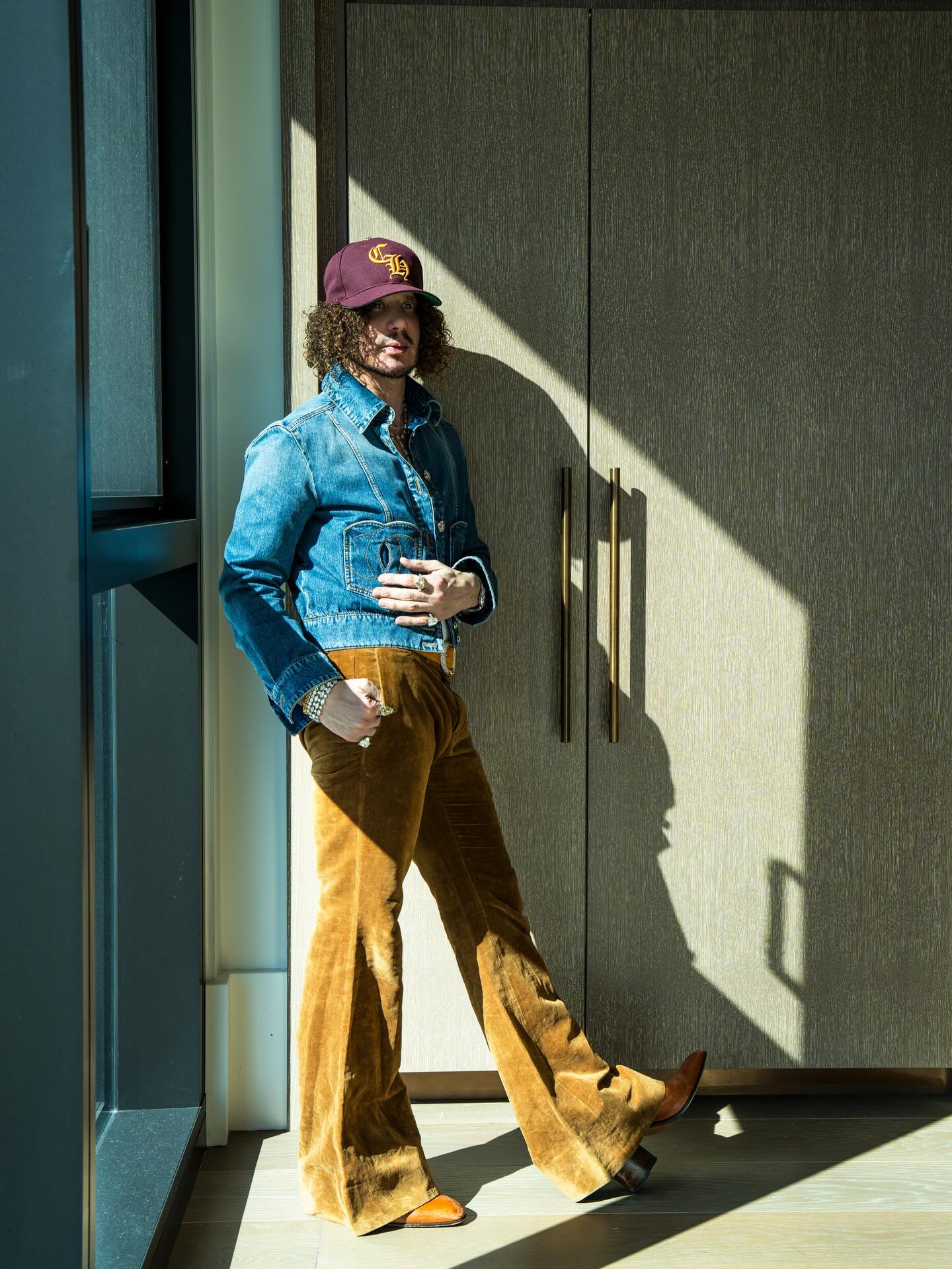
Andrew, let’s talk fashion. Does your wardrobe reflect your work as a filmmaker in any way?
Andrew Panay
I think it does, actually. I think it does a lot. My fashion has evolved. The other thing that’s changed for the better is confidence in who I am. I’m finally okay with myself. The fear in winning or losing will never go away, but knowing who you are is the good part about becoming an adult. That part’s nice. I wear what I want, and I am who Andrew Panay always wanted to be—even though he didn’t know who he wanted to be until he figured out who he wanted to be [laughs]. It’s funny, by going into fashion, you really can’t care what people think because it’s bold. My stuff’s bold. I know that, but it’s not for anyone else. Once I realized that I just started to enjoy it. But being into fashion like I am brings with it a lot of boredom, which means you have to change a lot to keep the boredom at bay. So, that can feel like torture. I’ll go, “I’m done with this jacket,” and someone will say, “What? You wore it twice!” I’m like, “It’s old already.” Nobody cares [laughs].
How does fashion affect my filmmaking? Well, big time, because my fashion matches the innovation that I’m pushing for with my films. So, now I’m finally matching what it is I’m driving for. If I walk into a room, I’m not trying to be anything, I’m actually being the guy that I’ve always wanted to be—with comfort now. I went through phases, Michael, where I’m like, “Am I sure this is what I want to be in? Am I vibing this? Do I feel comfortable in this? Do I even have the money to wear this?” All those things are insecurities, but once you finally cross over, the patterns have locked in, the experience is there, and the fashion sense becomes like, “I know who I am and I know the mistakes that I’ve made, and I’m okay to say that.” That’s when everything starts to come together and, oddly, your movies get better. From an innovation standpoint, you become increasingly driven to create something new.
Michael D. McClellan
Is there a movie in your catalog that you look back on and say, ‘That was hard to make’?
Andrew Panay
Well, there was a movie that I did called Earth to Echo, and I don’t really talk about it much, at least in terms of the story. It was a movie that we did for a very little money, and Disney supported me. I have to thank everybody involved, because everyone was beautiful and amazing. Alan Bergman was the president of Walt Disney Studios at the time, and Sean Bailey was the president of production. Alan Horn was the chairman, and Tendo Nagenda was the VP of Production. Together they greenlit Earth to Echo. It was bananas that they did, and they were amazing to me.
The film goes back to that theme of driven innovation. It’s a movie about these kids that find an alien in the woods, and they video it themselves. It was based on found footage off the cuff. Our premise was, “Let’s hire some kids and just roll camera, and barely show the alien. Let’s go.” And Michael, we were making the movie before we had a script. We were working on this movie, and we were really innovating. There was no branding. We had four kids that we found through a worldwide search. The movie was absolutely so cool, but the camera moved a lot. It was pretty wild for a kids movie. It tested through the roof, but there were challenges behind the scenes in that they wanted to go to Netflix, and I really wanted to go theatrical. In hindsight, it was a tough call. Disney let me have the movie, and I took it to Ryan Kavanaugh and Tucker Tooley at Relativity to help release the movie. Everybody worked together to make that happen.
Michael D. McClellan
Earth to Echo was a financial success, grossing $45 million worldwide on a $13 million budget. Having those relationships at Disney, how hard was it to move this project to Relativity?
Andrew Panay
For me, the adversity was moving from Disney to Relativity. It was adversity on a personal level. But because there was so much love—from me to them, and from them to me—we made it work for everybody involved. What an incredible experience—I had a movie made at Disney that Relativity released, but Disney was still involved, and they still had a part, and everybody worked together to make this happen. Honesty, Michael, it was really a big undertaking because it had no branding, and it was not really necessarily in the ethos of where Disney was at the time. I really had to find another gear to figure out where this movie belonged. It ultimately found its home and it did really well. I like to think that we did the right things.
Michael D. McClellan
The average filmgoer doesn’t realize how risky these bets on movies can be.
Andrew Panay
It can be especially risky when you are doing something that’s a little outside of a studio’s wheelhouse, which this was at the time. To Sean Bailey’s credit, and Alan Bergman’s credit, they said, “Let’s roll.” They gave me the movie and made sure that it found the right home, and we released it. So, there was a level of risk with this film. I mean, you’re talking about millions of dollars, big investments, and yet everybody was supporting each other at the different studios to help me make this happen. It’s a very cool story, how Earth to Echo came to be.
Michael D. McClellan
Hollywood gets a bad rap as a superficial, morally bankrupt bubble driven by ruthless ambition, narcissism, and greed. But in reality, there are good people working in this industry. People like Andrew Panay.
Andrew Panay
Thank you, Michael. I get emotional when I hear things like that, so thank you. And to your point, Earth to Echo is a very positive and loving story about Hollywood. I talk a lot about that, about the love of Hollywood. Sometimes it frustrates me when I hear bits and pieces around the world about how we’re this or we’re that, all those Hollywood stereotypes that you just mentioned. And I always go, “I don’t know, man. That’s not the Hollywood I live in.” I gotta tell you something. I got so much love for those colleagues and guys I just mentioned, that group that made a movie for me, that supported it to the end, even if Disney didn’t distribute it but Relativity did. Kavanaugh buys it. Tucker Tooley, who I just made a movie with, pours everything into it. Alan Bergman, who I have a beautiful relationship with, Sean Bailey, Tendo Nagenda, all these guys at Disney were onboard with this movie finding the right home. It’s a beautiful thing. You tell me, Michael. If you have a group of filmmakers and executives that are supporting you, even if it doesn’t fit the model, that’s pretty cool stuff to me. That says that this is a sustainable business model built on great relationships with people who do things the right way, who are ethical, who care. We’re going to take care of each other. That’s pretty cool. And everybody won with Earth to Echo because of the spirit behind that. I know it seems a little positive, Michael, but I’m not going to tell an untrue story. The love is insane. These guys are making sure that the filmmakers are taken care of and the movie is in the right spot. Unbelievable.
Michael D. McClellan
When your career is over years down the road, what do you hope your legacy will be?
Andrew Panay
Love, man. That I did it right. And that I wasn’t trying to be some hero, Michael. If the DNA isn’t love, and I’m just talking, then I think it’s just BS. I really do mean it. I don’t like it if it’s not with love. I’ll feel bad. Even with the brands I work with, and whatnot. It feels bad if it’s not love. If there’s not love, it feels off. It feels wrong. I know that sounds crazy, and I get that it’s a business, and that I’m not supposed to take it personally. I get it. I’ve heard it plenty of times and they’re right. And I shouldn’t. Except, when you give birth to an idea, where does it come from? It’s personal, Michael. The idea of Wedding Crashers and Earth to Echo, both of which I wrote, is personal. I’m sorry. Van Wilder, it’s personal, it comes from my own personal rhythms. It came out of my head. So yes, my feelings are going to get hurt.
So, if I could leave a legacy that says, “Hey, that guy did it with love, he loved the people he worked with,” I would call it a life well lived. I love everyone we’ve talked about, Michael. They’ve all supported me. Every name I’ve mentioned today, when I say love, they have supported me in a way where they put their careers on the line for me, because they believed in me. Yes, they believed in the story, but they believed that I would handle it with grace, because they believed that I would do the right thing and they in turn would do the right thing. I’m sorry, Michael. That’s not a business that people talk about, that it’s a this and a that, that sometimes I hear, “Oh, you guys are Hollywood.” Really? That’s not the Hollywood I know. I got guys at Disney bleeding for me. I don’t know, Michael, that’s pretty cool.
Look, I get it, everyone’s got to make business decisions. But as far as what I’ve experienced personally, it’s been about love. So, my legacy, I hope, is that this guy did it with grace, he did it with class, he never hurt anybody to get to where he got. That is straight off the table from my father, Michael. I remember being young and crying real tears and saying, “Dad, I didn’t get it. I should have gotten this. I didn’t ask for that.” He says, “Son, it will come.” And then he goes, “But we’re never going to hurt people. I understand you have that soft heart. We’re never going to hurt people to get there.” What a beautiful thing. And if I could pass anything along to the next generation of filmmakers, don’t hurt anyone on the way up. Don’t. Because it’s not worth it.
Michael D. McClellan
Andrew, thank you so much for the most amazing interview. I’m very thankful for your time and all of these great stories and words of advice.
Andrew Panay
Michael. Appreciate you. This has been a lot of fun. You really do have a beautiful way, and it has been a beautiful interview. You got me emotional a couple of times, and if you do that then you’ve got something special yourself. You still have me thinking about relationships. I can’t believe I’m going to say this, but when you do look back at your career and the longevity of it, the ultimate, most satisfying part is that all my friends that I came through the business with, I can email and text. They’re there, and I’m still working with them. If there’s anything I can leave this interview with, it’s that they’re still there. That says something about my life. For me. It’s not that I’m some great this or that. I know that I still have them, because I know it ain’t gonna be forever, Michael. At the end of the day, if I can still call them my friends, then I did something right.

- Force of Nature – The Andrew Panay Interview - September 26, 2026
- Mario Andretti – Full Throttle - February 4, 2024
- Tim Russ – Star Trek: Voyager - July 25, 2021
